We arrived in our little boat to the shore of the Coconut Beach Resort on Tavewa Island in Fiji, and were greeted by several smiling faces. Local Fijian people who work and live at the secluded resort sang welcome songs in the native language and handed us fresh coconuts. The tops had been chopped off and a straw poked out so that we could sip the coconut water. Linda, the manager of the resort, had long black hair and her blue skirt flapped in the breeze as she led us to the outdoor check-in desk. She offered us tea, coffee and banana cakes for afternoon tea.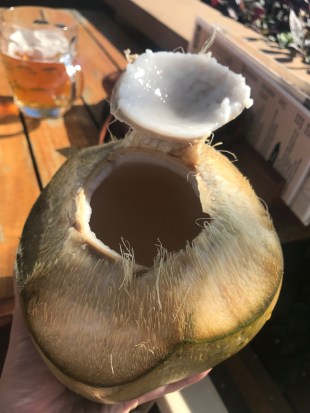
Our villa was small and beautifully decorated, and a hammock swayed on the porch. An outdoor shower was surrounded by island flowers, and when we looked up from under the water we could see palm leaves in the sun, or a starry night after dark. We changed and headed over for a family style dinner.
Long tables had been fashioned from several small ones. Jeff and I sat across from each other, me on the women’s side of the table, and him on the men’s side. An Italian couple sat to our left, and a couple from China sat to our right. Although a language barrier made it hard to converse, we introduced ourselves as best we could.
Dinner began with a traditional Fijian kava ceremony.
Kava is a powder ground from the root of a pepper plant, strained through water and sipped through a coconut shell. The ceremony can be formal and spiritual, or more casual. Kava makes users feel sleepy and relaxed. It has been banned in some areas of Europe but remains legal in the United States.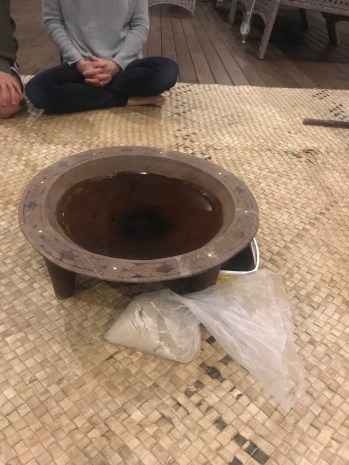
Those who wished to participate sat in a circle around three local men holding guitars. They sang traditional songs and began on one side of the circle.
“Bula!” They said, as they handed a coconut full of the earthy flavored kava to a man from New Zealand. He made a sour face as he drank.
“Bula” is Fijian, literally meaning “life”, but is used to say hello, to celebrate, and many other meanings. Even spending a short time in Fiji any tourist is bound to collect hundreds of “Bula’s”.
“Bula!” said the Kiwi man as he passed back the empty shell.
After the kava ceremony we indulged in locally caught marlin covered in a fresh coconut cream sauce, fresh fruit and spinach that had grown on the island.
The next day, Jeff and I went back out in the small boat to try handline fishing with the staff.
Traditionally, Fijians use a plastic wheel with fishing line wound around it and unravel it until it hits the sea floor. By placing two fingers around the line, they feel for a bite or a tug to indicate when a fish has taken the bait. Then, they use their hands to pull in the fish hooked on the line.
Using an octopus that had been spear fished the day before, Jeff pulled in two reef fish. The staff cleaned the fish on the boat and we took them back to the resort.
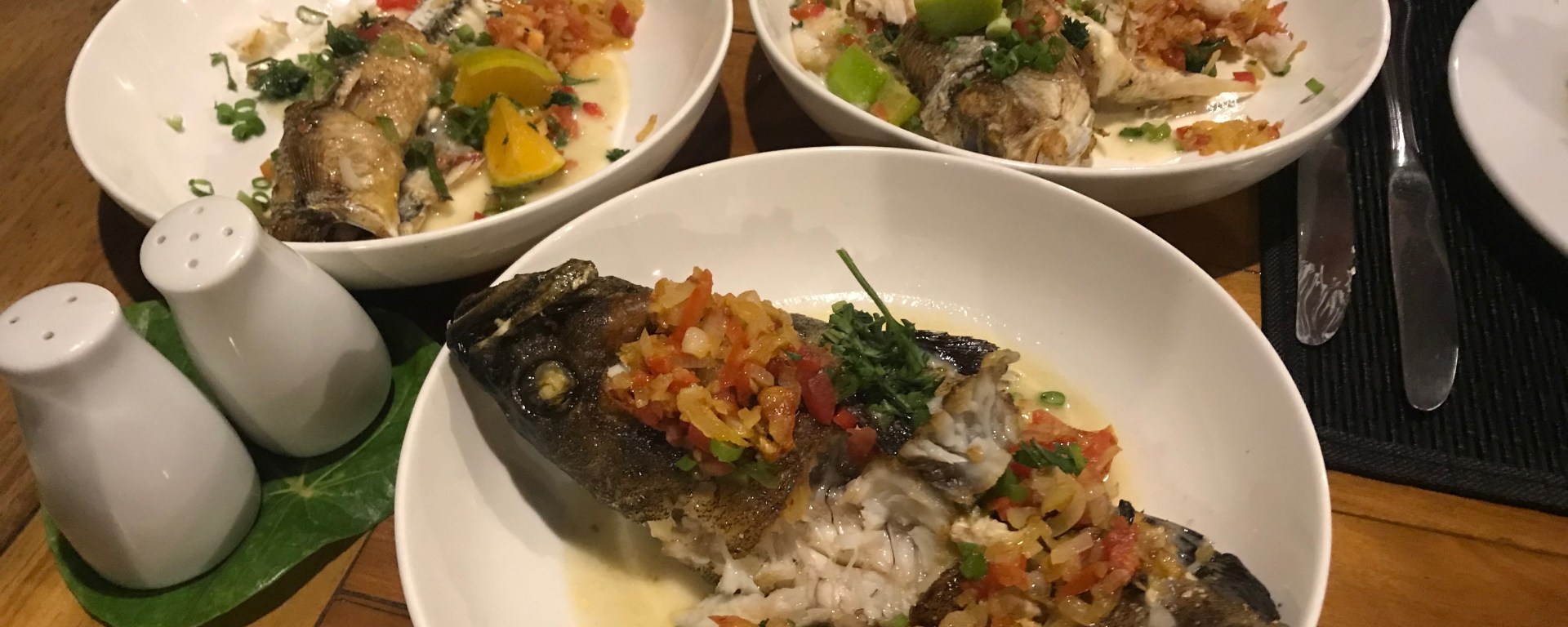
Another family style dinner allowed us to share our catch with our friends we’d met on the island. Each fish was roasted and covered in a pineapple and tomato salad and squirted with lime juice.
I would highly recommend this authentic experience to anyone visiting Fiji. Fresher fish is hard to find.


 A Taste for Travel